

Building the perfect PC for High-Frequency Trading
In high-frequency trading (HFT) and other low-latency, algorithmic trading environments, every millisecond (and often every micro-second) matters. While software and network infrastructure are obviously critical, your workstation hardware plays a foundational role in reducing input lag, improving throughput, enabling fast decision loops, and ensuring reliability. A workstation built for general trading or charting is one thing; an HFT workstation must be optimised for ultra-low latency, maximal stability, and precision.
Below is what to consider to go beyond minimum requirements; hardware choices that ensure performance under real HFT workload.
Key hardware considerations for High-Frequency Trading
Processor (CPU)
Since many trading algorithms, market-data feeds, order matching, and latency-sensitive tasks are heavily single-threaded or depend on very fast execution in a small number of threads, CPU frequency (boost / turbo) is often far more important than core count. However, additional cores can help if you are running multiple strategies, backtesting, or doing quant research simultaneously.
What to aim for
-
A CPU with very high single-core boost clock speeds (e.g. 5 GHz+), excellent per-core latency. Models like Intel’s high-end consumer / gaming parts (e.g. i9-series) or AMD equivalents that deliver good single-thread performance.
-
Avoid CPUs that have excellent core counts but weaker per-core performance, unless your workload is heavily parallelised.
-
If backtesting or heavy quant computation is part of your setup, a hybrid approach: high boost clocks for core trading, with sufficient cores / threads for batch work.
Why this matters:
- Every increase in CPU latency or slower instruction execution adds up when processing many ticks / quotes per second.
- High-clock CPUs allow faster handling of interrupts, quicker decision trees, faster serialisation / deserialisation of market data.
Memory (RAM) and Storage (Drives)
Fast, reliable access to memory is crucial; bottlenecks here translate directly into latency and jitter.
-
RAM:
-
Minimum for serious trading work: 32 GB
-
Recommended: 64 GB or more, especially if running multiple data feeds, charting, backtesting tools, or if you keep many subsystems in memory.
-
Use low latency, high frequency RAM modules (e.g. DDR5 where supported) to reduce memory access delay.
-
Storage:
-
Primary drive: NVMe SSD for OS, trading platforms, and live market data. The fastest possible NVMe (Gen4/5 if the platform supports it) with good sustained write/read performance.
-
Secondary / archival storage: SSD or high-speed HDD to store historical tick data, logs, and backups.
-
Prefer drives with good endurance and reliability; you’ll be doing many reads/writes of small files, logging, etc.
Graphics card (GPU) and multiple displays
In HFT, the GPU is rarely a bottleneck for compute or rendering of 3D workloads. Your GPU’s role is mostly to reliably drive multiple displays, maintain high refresh rates, and ensure screen updates keep up with your mental model without lag or tearing.
Considerations:
-
Use a GPU that has multiple display outputs; even modest workstation-class cards or mid-range consumer cards often suffice. Overkill in GPU compute power is often waste.
-
Monitor count tends to be high. Many traders run 4, 6, even 8 monitors to simultaneously view charts, order books, news feeds, strategy dashboards, etc.
-
Ensure the GPU (or GPUs) can handle these displays at desired resolutions and refresh rates without lag. For example, if using multiple 4K monitors or very high refresh (120Hz+), you’ll want a GPU capable of outputting at those rates with good frame buffering.
Network / connectivity and latency reduction
Often overlooked in “hardware” sections, but in HFT environments network latency often dominates over everything else. A fast workstation only helps if data can reach you and you can send orders quickly.
- Prefer wired, low-latency Ethernet connections (10 GbE if feasible) or specialist network cards.
- Reduce hops: colocate if possible; reduce software stack / OS interruptions; optimise driver stack and OS settings.
- Use NVMe or SSDs local to workstation rather than network storage for live feeds.
System stability and redundancy
-
In HFT, crashes or glitches are expensive.
-
High-quality PSU (power supply) with good regulation, protection, headroom.
-
Good cooling (air or liquid) to avoid thermal throttling under sustained high CPU load / constant operation.
-
Redundant components where possible (dual drives, backups, possibly redundant network paths / connections).
-
UPS (uninterruptible power supply) to avoid drop-outs.
-
Example best CPUs and GPUs for HFT Workstations
Here are some example hardware picks that tend to be suitable for an HFT workstation (assuming budget allows), to give you a sense of trade-offs.
| Component | Recommended Picks / Traits |
|---|---|
| CPU | Intel Core i9-14900K / i9 high boost: high single core turbo; AMD Ryzen 9950X3D also good if per core latency is competitive. |
| GPU | Mid to upper mid workstation / consumer card with multiple outputs (eg NVIDIA RTX A-series or RTX / GeForce high-end). The priority is display output and refresh, less raw GPU compute. |
| RAM | 64 GB low latency DDR5; dual channel (or more) depending on board. |
| Storage | NVMe Gen4/Gen5 SSD (Primary), backup SSD; consider local caching of data. |
RECOMMENDED HFT WORKSTATION CONFIGURATIONS
Depending on your scale (number of data feeds, number of monitors, how many strategies you run, backtesting vs live trading), here are example workstation levels:

SKU: 5060959094494
£5,598.00 (inc VAT)
- Fractal Design Epoch XL Tower Black
- AMD Ryzen 9 9950X3D2 4.3 GHz 16-Core CPU – 5.6GHz Turbo
- Gigabyte X870 EAGLE WIFI7 ATX Motherboard
- NVidia GeForce RTX 5090 32GB GDDR7 GPU
- 64GB DDR5 6000MHz Memory (2x32GB)
- 2TB NVMe M.2 SSD (up to 5000MB/R, 4200MB/W)
- MSI MAG CORELIQUID A13 360mm Black
- 1000W – FSP Vita 80+ Gold Modular ATX 3.1 PCIe5.1 PSU
- Built in Wi-Fi and Bluetooth
- Built in 5.1 Sound Card
- Microsoft Windows® 11 Home

SKU: 5060506947730
£6,683.00 (inc VAT)
- HAVN HS420 Premium Case Black + 8x The…
- AMD Ryzen 9 9950X 4.3GHz 16 Core CPU – 5.7GHz Turbo
- Gigabyte X870E AORUS ELITE WIFI7 ATX Motherboard
- NVidia GeForce RTX 5090 32GB GDDR7 GPU
- 128GB Crucial DDR5 5600Mhz CL46 (2x64GB)
- 1TB NVMe M.2 SSD (up to 6000MB/R, 4000MB/W)
- 16TB Seagate 3.5″ Ironwolf Pro HDD, 2 Years Rescue+DataRecovery on registration
- Corsair NAUTILUS 360 RS Liquid CPU Cooler
- Contour 1000W ATX 3.1 Full Modular High Efficiency PSU
- Built in Wi-Fi and Bluetooth
- Built in 5.1 Sound Card
- Microsoft Windows® 11 Professional
SKU: 5060959090007
£4,608.00 (inc VAT)
- Fractal Design Epoch XL Tower Black
- Intel Core Ultra 9 285K 3.7/5.7GHz 24 Core CPU
- Gigabyte Z890 AORUS ELITE WIFI7 Motherboard
- NVidia Quadro RTX 4000 ADA 20GB Professional GPU
- 64GB DDR5 6000MHz Memory (2x32GB)
- 1TB WD Black SN7100 M.2 PCIe 4.0 NVMe SSD [7250MB/s R, 6900MB/s W]
- 4TB WD Black SN7100 M.2 PCIe 4.0 NVMe SSD [7250MB/s R, 6900MB/s W]
- Corsair NAUTILUS 360 RS ARGB Liquid CPU Cooler
- Corsair RM850e Cybenetics Gold 850w Modular ATX 3.1 PSU
- Built in Wi-Fi and Bluetooth
- Built in 5.1 Sound Card
- 7 port USB 3.2 PCIe Card, 3 x USB 3.2 Type-A + 2 x Type-C + Internal Header
- Microsoft Windows® 11 Professional
- 2 x Be Quiet! Silent Wings 4 PWM – Black 140mm Case Fans
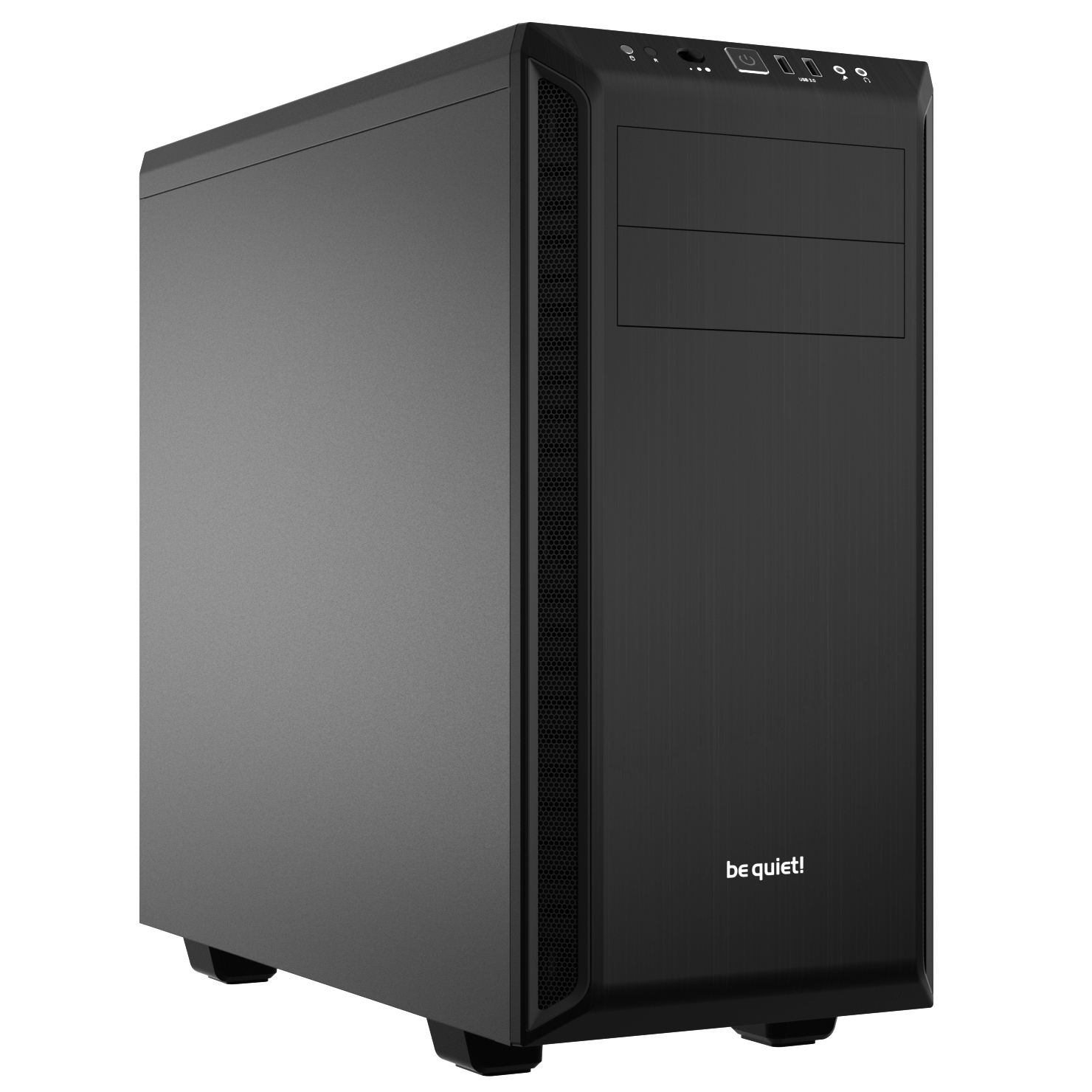
SKU: 5060959094937
£4,660.00 (inc VAT)
- Be Quiet! Pure Base 600 Black Case
- Intel Core Ultra 9 285K 3.7/5.7GHz 24 Core CPU
- ASUS PRIME Z890-P WIFI Motherboard
- NVIDIA RTX PRO 4000 24GB Blackwell Graphics Card 140W
- 64GB DDR5 6000MHz CL36 (2x32GB)
- 1TB NVMe M.2 SSD (up to 6000MB/R, 4000MB/W)
- 4TB NVMe M.2 SSD (6000MB/R, 5000MB/W)
- MSI MAG CORELIQUID A13 360mm Black
- Contour 850W ATX 3.1 High Efficiency PSU
- Built in Wi-Fi and Bluetooth
- Built in 5.1 Sound Card
- Microsoft Windows® 11 Professional
Case study:

Massive multi-monitor machine
Punch Technology Ltd was approached by a financial industry customer looking for a specialist workstation that could power 18, 27″ monitors from one system. Read our case study: “Massive multi-monitor machine” to discover how we approached this custom challenge.
Punch Technology Ltd
Meyer Building
Wirral International Business Park
Bromborough
Wirral
CH62 3RH
Technical Support Number: 0151 3179860
Head Office Number: 0151 3179860
Company Number: 10250445
VAT Number: 245 0802 29
Trade Mark: UK00003257797
FCA Number is 809833.